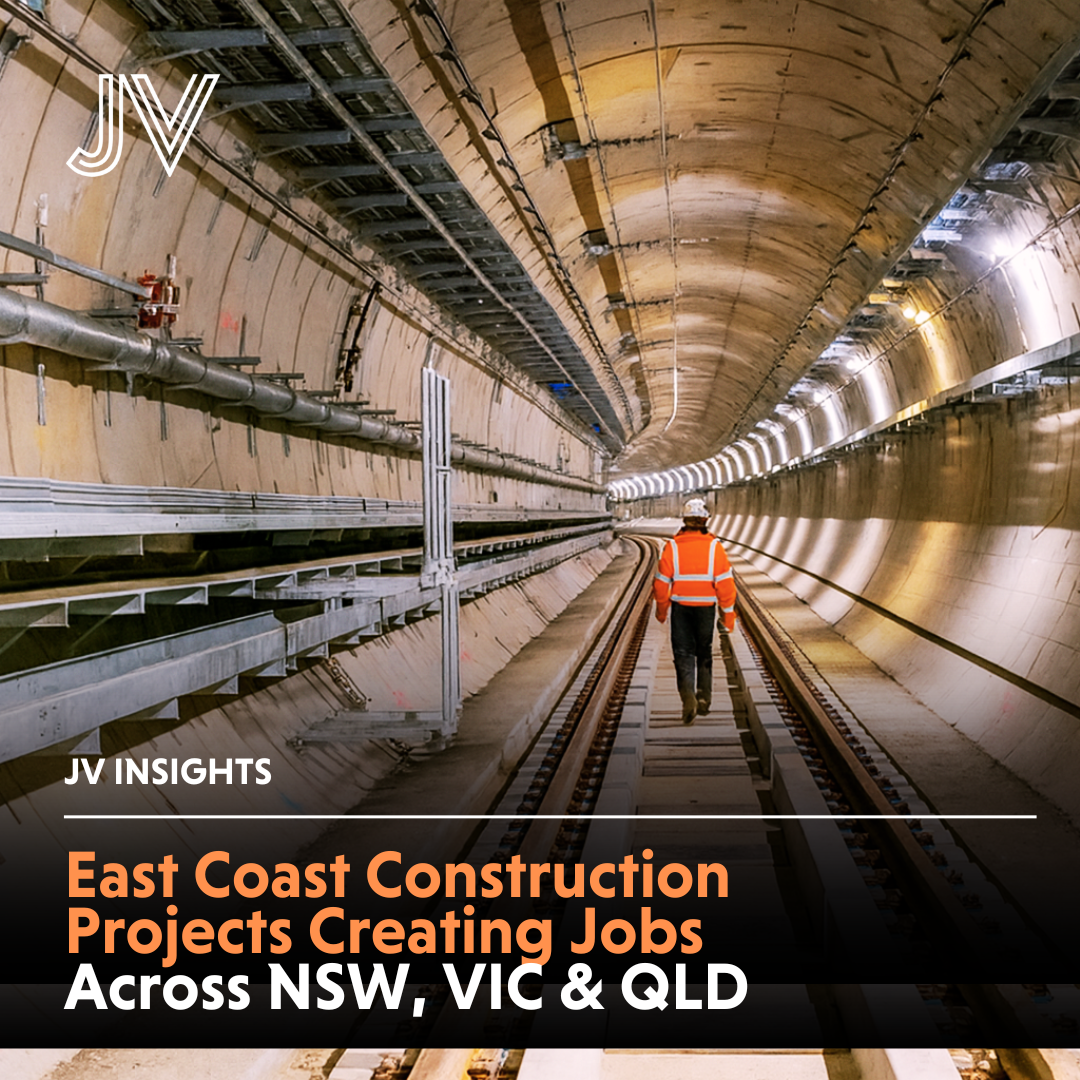
Building approvals are only the beginning. Does the Construction industry have the workforce to deliver?
The latest figures from Construction Skills Queensland and the Queensland Building and Construction Commission tell a fairly clear story: more residential projects are being approved in Queensland, but the number of homes actually being completed is still lagging behind longer-term averages.
Although the data relates specifically to Queensland, the challenge it highlights is not confined to one state. Across Australia’s east coast, approved projects still depend on builders having access to the right trades, supervisors and construction professionals at every stage of delivery.
The demand may be there and the projects may be approved, but does the industry have the workforce capacity to complete them?
What is holding up residential construction?
Working closely with residential builders and construction businesses across Australia’s eastern seaboard, the JV Recruitment team consistently sees three issues contributing to delays on site.
1. Trade availability and scheduling pressure
Skilled trades remain in high demand across Queensland, New South Wales and Victoria.
Residential builders are competing for workers with major infrastructure, commercial construction, civil projects and other large-scale developments. If one crew is unavailable, the impact rarely ends with that stage. Trades scheduled to follow may move to other projects, forcing builders to coordinate an entirely new sequence.
2. Subcontractor and material misalignment
Residential construction depends on people, materials and activities coming together in the right order.
Trades arriving before materials are available create downtime. Materials arriving before the workforce or site is ready can cause further scheduling problems. A single breakdown in timing can create a domino effect across the remainder of the project.
3. Variation management
Variations are sometimes unavoidable, but unclear documentation and slow approvals can bring work to a standstill.
Changes introduced during construction may require different materials, additional labour or adjustments to the schedule. When the details are unclear, subcontractors and workforce providers may be unable to confirm who is required or when work can proceed.
Workforce planning is project planning
Recruitment is often treated as a response to an immediate vacancy or a project already under pressure. In a constrained labour market, that may be too late.
Workforce planning should begin alongside project planning. Here are six ways builders can better align people with project delivery.
1. Forecast workforce requirements early
Map workforce requirements against upcoming project stages to identify skills gaps before they affect delivery, particularly when multiple projects are running concurrently.
2. Secure key trades before critical stages
Engage a recruitment and labour partner early, allowing enough time to source, screen and schedule people with the right skills, experience and availability.
3. Align labour schedules with material availability
Coordinate workforce and procurement schedules so people and materials arrive when they are needed. Communicate delivery changes early to give labour partners time to adjust.
4. Establish clear documentation and variation procedures
Variations can change labour requirements and project sequencing. Clear documentation helps subcontractors and recruitment partners understand what people will be needed and when.
5. Communicate when circumstances change
Weather, materials, site conditions and client requirements can all shift construction schedules. Early communication helps labour partners preserve workforce availability and respond quickly.
6. Choose a recruitment partner that understands construction sequencing
A specialist construction recruitment partner understands how each role fits within the wider program. They can anticipate changing requirements and help create flexibility across skilled labour and white-collar recruitment.
Turning approvals into completed homes
Recruitment cannot resolve every factor affecting residential construction timelines. It can, however, help ensure workforce availability does not become the issue preventing approved projects from being completed.
JV Recruitment supports construction businesses across Queensland, New South Wales and Victoria with skilled labour hire and permanent and contract white-collar recruitment.
Australia needs more homes, but approvals alone will not deliver them. The industry also needs the workforce capacity to turn plans on paper into completed projects.
Planning your workforce requirements across upcoming projects?
Contact the JV Recruitment team on 1300 CALL JV and get #WorkDoneRight.
Construction recruitment FAQs
How can builders secure skilled trades before a project starts?
Builders can secure skilled trades earlier by forecasting labour requirements against the construction program and engaging a construction recruitment agency before workers are urgently needed. This allows more time to source, screen and schedule suitable people.
How can a construction recruitment agency help prevent project delays?
A construction recruitment agency can identify workforce gaps, supply skilled labour during peak periods and recruit permanent or contract professionals. Early involvement helps reduce the risk of labour shortages interrupting critical stages.
What is the difference between construction labour hire and permanent recruitment?
Construction labour hire provides flexible workers for short-term, project-based or changing requirements. Permanent recruitment helps builders appoint ongoing employees, while contract recruitment provides experienced professionals for a defined period or project.
What construction roles can JV Recruitment help builders fill?
JV Recruitment supplies skilled construction labour and recruits permanent and contract white-collar professionals, including site managers, supervisors, estimators and contract administrators. Available talent depends on project requirements and local market conditions.
When should a builder engage a construction recruitment agency?
Builders should engage a construction recruitment agency while project schedules and workforce requirements are being planned. Early engagement gives recruiters more time to find suitable people before labour gaps affect delivery.
Where does JV Recruitment provide construction labour hire?
JV Recruitment provides construction labour hire across Queensland, New South Wales and Victoria, with local teams supporting builders and construction businesses across Australia’s east coast. In Victoria, JV Traffic also provides Traffic Management services and labour hire.
Can JV Recruitment support construction businesses operating across multiple states?
Yes. JV Recruitment supports construction businesses across Queensland, New South Wales and Victoria with labour hire and permanent and contract recruitment across different markets and project locations.